
FAQ Incense Coil
Incense Coil
The Bridge of Smoke: Connecting with Those Who Came Before

Have you ever lit a piece of incense and just watched the smoke drift upward? In many cultures, that gentle ribbon of smoke is not just a pleasant aroma; it is a medium or a spiritual telephone line.
In Asian cultures, particularly across Vietnam, China, and Japan, people worship their ancestors. It is rooted in the beautiful belief that our loved ones never truly leave us; they move to a different realm, or re-birth to a different life. People believe they are continuing to look after, guide, and protect the family. But to keep that connection alive, a bridge must be built. That bridge is incense.
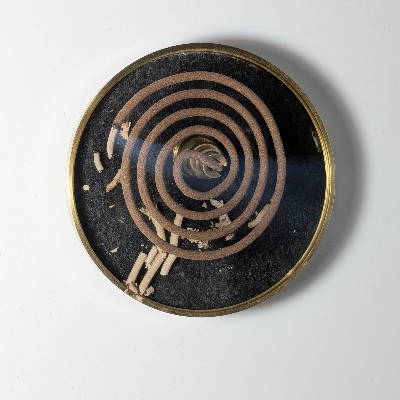
When we light a spiral incense coil at the family altar, something powerful happens. The circular shape signifies infinity, a bond with our ancestors that has no beginning and no end. Because a coil burns slowly, filling the room with a deep, grounding aroma like agarwood, it creates a prolonged space for reflection. It forces us to slow down, remember our roots, and show gratitude to those who paved the way for our existence. We talk to them, ask them to give us strength and bless us.
But this profound ritual is not just about spirituality. Historically, the way these very coils burned intertwined with daily life and survival in fascinating ways...
How were incense coils used to time night watches?
Spiral incense coils were used to keep time during night watches because the duration of a watch was too long to be measured by a standard incense stick. Because the incense burned at a steady and predictable rate, it provided a reliable way to measure long passages of time, allowing guards to know exactly when it was time for different shifts to replace one another (Huang, 2022; Hughes, 2007).

Grandawood Agarwood Coil Incense
What are common natural binders used in coil incense?
When crafting shaped incense like coils, sticks, or cones, traditionally, honey and water are most commonly used as natural binders to hold the finely ground ingredient powders together (Hughes, 2007; Fischer-Rizzi, 1996).

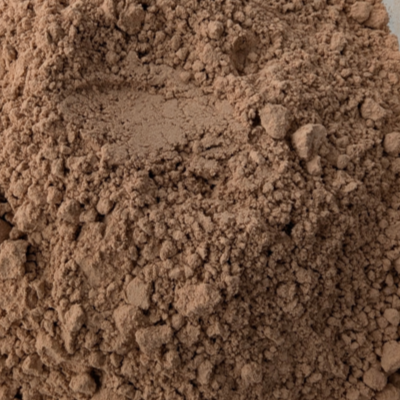
Grandawood incense joss powder
In the broader traditional incense-making process, a variety of other natural bonding agents and liquids are also used to create the paste needed to extrude or mould these shapes. Below are some details.
- Natural Gums: Gum arabic, agar agar, guar gum, tragacanth, locust bean gum, karaya, ghatti gum, and xanthan gum are widely used to pull the aromatic portions and the base together (Hughes, 2007). Most people prefer this option because they are plant-based, easy to find, and cost-effective (Hughes, 2007). We also use Litsea glutinosa or Makko Powder. These two binders are great for Agarwood and sandalwood incense.
- Plant Barks and Roots: The bark of the elm root was historically thinned with water in ancient China to bind wood dust, and the sticky bark of the Japanese tabuko tree provides a neutral binding substance (Hughes, 2007).
- Liquids: While water is the most common liquid used to turn the bonding agent into a glue, other liquids like wine, brandy, rose water, and olive oil are also utilised (Hughes, 2007).
- Edible Bases: Ingredients like plum jam, Japanese sweet pea, and mountain chestnut honey are specifically used to bind traditional Japanese incense pellets (nerikoh), which also helps prevent the incense from becoming mouldy (Hughes, 2007).
Are there other plants used as natural binders?
In addition to the binders previously mentioned for incense, some people search for more because the above may not be available. Several other plants and plant derivatives have historically and industrially been used as natural binders, adhesives, or glues:
-
Arrowroot (Maranta arundinacea):

Image by Brett Hondow from Pixabay
Native to Central and South America, the starch extracted from the rhizomes of this plant is traditionally used as a thickener in foods, but it is also used industrially inthe manufacture of glues, pastes, and powders.
- Acacia Trees (Acacia senegal): These trees, native to northeast Africa, produce gum arabic, an exudate that has been used as an adhesive since early Egyptian civilisation (Hughes, 2007). In incense making, gum arabic is frequently dissolved in water and mixed with incense powder to act as the glue that binds the material into shapeable cones or sticks (Hughes, 2007).
-
Guar or Cluster Bean (Cyamopsis tetragonoloba):

photo by Surya Prakash.S.A.
The ground endosperm of this plant's seeds produces guar gum (Hughes, 2007). Beyond its use as a food stabiliser, it has powerful industrial binding applications,including being used as a binding agent in explosives.
- Marsh Mallow (Althaea officinalis): The roots of this plant yield a thick, mucilaginous substance. While traditionally used as the base for the confection of the same name, its sticky properties were utilised before being largely replaced in modern times by gum arabic. It is a potent plant-based binder
- Plum (for Plum Jam) and Japanese Sweet Pea: In traditional Japanese incense crafting, specifically for making blended incense pellets called nerikoh, people select plum jam as a sticky base to knead powdered fragrant substances into a dough (Hughes, 2007). Japanese sweet pea is often added alongside it, as it acts as a binder and helps prevent the buried, fermenting incense dough from becoming mouldy (Hughes, 2007).
How did incense help with ancient Chinese medical treatments?
In ancient China, the use of incense was deeply intertwined with Traditional Chinese Medicine (TCM) and philosophy (Chen, 2024). In fact, the earliest forms of Chinese incense were not created for temples or religious spaces, but rather as herbal remedies that were heated to release therapeutic scents (Chen, 2024).
Practitioners believed that inhaling these aromas allowed the body to absorb the herbs' medicinal properties, thereby improving health and restoring physical balance (Chen, 2024). This led to the medical art of hexiang—the harmonious blending of different herbal aromas (Chen, 2024). The creation of hexiang was treated much like a doctor prescribing a medical formula, carefully balancing warming and cooling elements so that each ingredient's essence contributed to the patient's well-being (Chen, 2024).
Ancient Chinese healers utilised a variety of specific incense materials to treat different ailments:
- Agarwood (Chen Xiang): Highly valued in TCM, agarwood was traditionally used as a sedative and to treat abdominal pain (Lertnimitphun, 2021; Hughes, 2007). Ancient medical texts, such as the Ming Yi Bie Lu and Hai Yao Ben Cao, recorded its effectiveness in treating cholera, heart troubles, psychological symptoms, and even comas (Lertnimitphun, 2021). It was also prescribed to alleviate joint pain caused by cold and dampness, calm asthma, stop nausea, and warm the kidneys to aid in the body's absorption of qi (energy) (Lertnimitphun, 2021).
- Mugwort (Moxa): Mugwort was utilised in a specific medical heat therapy known as moxibustion. The dried herb was shaped into cones or cigar-like sticks and burned near or directly on the skin over specific acupuncture meridians (Hughes, 2007). This targeted burning of moxa was used to stimulate energy channels, treat lung conditions like asthma, relieve joint pain, stop diarrhoea, and keep sinuses clear.
- Sandalwood and Cinnamon: In medicinal incense blends, sandalwood was specifically selected for its ability to warm the body, support kidney health, and improve energy flow (Fischer-Rizzi, 1996). Cinnamon and mugwort were frequently incorporated for their calming properties and to promote respiratory health (Fischer-Rizzi, 1996).
- Cannabis: According to early Chinese pharmacopoeias like the Pên Ching (written in the first century BC), ancient Taoists combined cannabis with other ingredients and inhaled the smoke from incense burners to utilise its psychoactive effects.
- Camphor: Documented in Chinese texts dating back to 400 BC, camphor was imported from India alongside early incense-burning practices (Katsumata, 1924). It was used both as a burned incense and as a fragrant powder rubbed on the body to provide an agreeable, cooling relief from intense heat (Katsumata, 1924).
The ancient medicinal uses of agarwood
Agarwood (also known as aloeswood, eaglewood, or Chen Xiang) has a rich history of medicinal application across several ancient healing traditions, including Chinese, Ayurvedic, Thai, Tibetan, and Islamic medicine (Lertnimitphun, 2021). Ancient healers highly valued it for its physical and psychological benefits, utilising it to treat a wide range of ailments (Lertnimitphun, 2021; Hughes, 2007).
Traditional Chinese Medicine (TCM)
In TCM theory, agarwood is characterised as having a warming property and a spicy flavour that interacts directly with the spleen, stomach, and kidney meridians (Lertnimitphun, 2021). Over centuries, numerous classical Chinese medical texts recorded its diverse applications:
- Gastrointestinal and Cardiovascular Health: The Ming Yi Bie Lu (Miscellaneous Records of Famous Physicians), one of the earliest texts to describe agarwood, noted its effectiveness in treating cholera and heart troubles (Lertnimitphun, 2021). It was also widely used to relieve abdominal pain, direct rebellious qi (energy) downward, and stop nausea and vomiting (Lertnimitphun, 2021).
- Neurological and Wound Care: The Hai Yao Ben Cao (Overseas Materia Medica) prescribed agarwood for psychological and neurological symptoms, including mental distress and comas (Lertnimitphun, 2021). It was also incorporated into ointments to treat swollen wounds (Lertnimitphun, 2021).
- Respiratory and Kidney Function: Ancient practitioners believed the kidneys were responsible for "absorbing qi" from the lungs (Lertnimitphun, 2021). The Ben Cao Qiu Zhen (Seeking Accuracy in Materia Medica) stated that agarwood warms the kidneys and tonifies yang, making it a vital treatment for asthma, shortness of breath, and chronic respiratory issues. The Yao Xing Fu (Medicine Properties in Verse) also highlighted its use for calming asthma (Lertnimitphun, 2021).
- Pain and Fluid Regulation: The Ri Hua Zi Ben Cao recommended it for alleviating joint pain caused by cold and dampness, while the Ben Cao Jing Shu noted its ability to dry dampness in the spleen and reduce edema (swelling) (Lertnimitphun, 2021). Furthermore, it was used to treat lower back and knee pain stemming from a weakness of "kidney fire" (Lertnimitphun, 2021).
Ayurvedic and Traditional Thai Medicine
In the ancient traditions of India and Thailand, agarwood was recognised as a powerful healing agent (Lertnimitphun, 2021; Dahham et al., 2016).
- Pain and Inflammation: It was heavily utilised to treat rheumatism, general pain, and inflammatory-related disorders (Lertnimitphun, 2021; Dahham et al., 2016).
- General Ailments: Practitioners also prescribed it for fever, constipation, vomiting, and severe coughs (Lertnimitphun, 2021; Dahham et al., 2016).
Islamic and Arabian Medicine
In the Islamic Golden Age and ancient Arabian texts, agallochum (agarwood) was highly regarded as both an incense and a medicinal fumigant.
- Internal Balance and Organ Health: It was described as being "hot and dry in the third degree". Ancient physicians believed it could open obstructions, break winds, and disperse excess moisture in the body.
- Vitality: It was prescribed to strengthen the intestines, invigorate the heart, and benefit the brain and sensory organs.
- Bladder Health: It was specifically noted as beneficial for treating incontinence originating from a "cold" bladder.
Tibetan Medicine and Shamanism
In Tibetan Buddhist and shamanic practices, illness was often viewed as a disturbance of the human spirit (Hughes, 2007).
- Emotional Healing: The essence extracted from the resinous wood was known to emit a psychoactive scent that possessed distinct medical properties (Sorensen, as cited in Hughes, 2007). It was specifically utilised in Tibetan medicine to treat emotional weaknesses, soothe the psyche, and restore mental balance (Hughes, 2007).
References
Chen, N. (2024, November 8). Young artisans revive curative benefits of Chinese incense. China Daily (Hong Kong ed.), 1.
Dahham, S. S., Tabana, Y. M., Sandai, D., Ahmed, M. A., & Majid, A. M. S. A. (2016). In vitro anti-cancer and anti-angiogenic activity of essential oils extracts from agarwood (Aquilaria crassna). Medicinal & Aromatic Plants, 5(4), 256. https://doi.org/10.4172/2167-0412.1000256
Fischer-Rizzi, S. (1996). The complete incense book. Sterling Publishing.
Huang, B. (2022). The religious and technological history of the Tang dynasty spherical incense burner. Religions, 13(6), 482. https://doi.org/10.3390/rel13060482
Hughes, K. (2007). The incense bible: Plant scents that transcend world culture, medicine, and spirituality. Haworth Press. (Reprinted 2014 by Routledge).
Katsumata, S. (1924). Gleams from Japan. (Reprinted by Kegan Paul, Trench, Trubner & Co.).
Lertnimitphun, P. (2021). Medicinal uses of agarwood. Chinese Medicine and Culture, 4(4), 246–251. https://doi.org/10.4103/CMAC.CMAC_43_21
Leave a comment
Comments will be approved before showing up.